As the global community grapples with various regulatory frameworks and policy recommendations put forward by states, social media companies, and academia, the pivotal role of traditional media and journalists often slips under the radar. The article discusses information integrity efforts in East Asia, including digital provenance and fact-checking. In specific,...
On November 10, 2023, we convened a diverse group of experts at the National Academies of Sciences in Washington D.C. for our 8th Annual Workshop. Our goal? To examine the critical question: what should national security look like in a globally connected digital economy? Today, we're excited to release a...
OpenAI's recently launched GPT store potentially marks a significant shift in the global digital economy landscape, presenting a viable competitive threat to established platforms like Apple's App Store. Competition in the global digital economy is all about creating platforms that bring different sides of a market together to create value....
Dispatches from the evolving digital political economy Is De-Dollarization fueled by the rise of Digital Currencies? Nations, particularly within the BRICS alliance, are increasingly exploring alternatives to the US dollar. The rise of Central Bank Digital Currencies (CBDCs) is playing a pivotal role in shaping the conversation around De-dollarization. The...
Reports on the evolving digital political economy A Victory for Free Speech on Social Media A federal appeals court has upheld a finding that U.S. federal officials violated the First Amendment by coercing or strongly encouraging social-media platforms to censor content. The court also narrowed the scope and targets of...
In an era where digitalization is rapidly transforming societies and economies, the question of digital sovereignty has taken center stage. How can nations harness the power of technology while safeguarding their autonomy and interests? India, with its burgeoning digital landscape, is at the forefront of this conversation. As part of...
Reports on the evolving digital political economy Human Authorship and AI Images A lot of bad policy about AI is being made because people are overstating its risks. These overstatements usually derive from overestimating the autonomous nature of the AI. Now we are getting some bad law for the same...
15 May, 2023 More Wrong Thinking on Generative AI Risks Civil society is in trouble if the musings of an anonymous philosopher on the LESSWRONG website, most likely by a national security official with access to a closed CISA meeting, reflects the current zeitgeist inside governments concerning generative AI. The...
15 April, 2023 The AI Regulation Frenzy Technology panics now seem to go through fashion cycles. Last month it was Tiktok. The new trend in town is AI regulation. Would-be policy influencers are falling all over themselves to advance the idea that “We are hurtling forward in a way that...
March 16, 2023 New Dutch semiconductor export controls, a global regime grows In a March 8 letter, the Dutch Ministry of Economic and Development Cooperation and Ministry of Foreign Affairs notified the elected Parliament of its plan to implement additional export control measures for advanced semiconductor manufacturing equipment, consistent with...
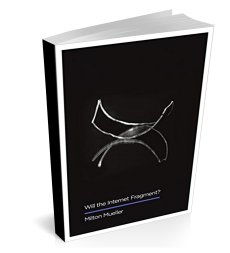
“In characteristically rigorous fashion, Mueller’s outstanding book punctures the alarmist myth of Internet fragmentation and helps us to understand what is really at stake as nations and other groups vie for power over the Internet.”